
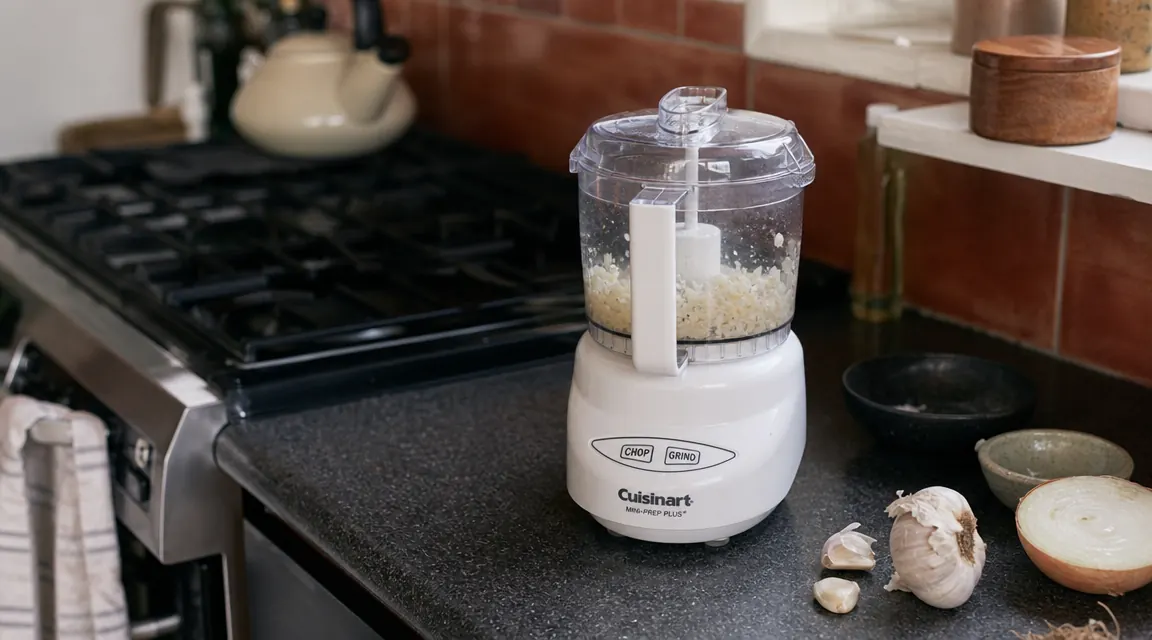
Here is the thing about the Hamilton Beach 3-Cup Mini Food Processor that no review actually warns you about: the first three times you use it, the lid smells. Not a machine smell. More like warm plastic being introduced to friction for the first time. It airs out by the fourth or fifth use and never comes back, but if you pop it open fresh out of the box and immediately try to make hummus for company, you are going to be confused and slightly annoyed. Nobody mentioned this to me. I am mentioning it to you.
I bought the Hamilton Beach 3-Cup (ASIN B06Y2GZWCJ) about 14 months ago for my Brooklyn apartment kitchen. My galley is 8 feet long with maybe 16 inches of clear counter on a good day. At its current price, this machine cost me less than two trips to the farmers market. That is the context for everything I am about to tell you. Most of the quirks I am going to describe are real, and most of them are ones I keep living with anyway.
The Quick Verdict
A genuinely capable mini chopper with a few specific frustrations that matter most if you batch-cook or process wet ingredients regularly. For garlic, onions, herbs, and salsa in a small kitchen with no room for a full processor, it is very hard to beat at this price.
Amazon Check Today's Price →Tired of mince-chopping garlic at 7pm after work? This affordable machine does it in four seconds.
The Hamilton Beach 3-Cup has 36,000+ Amazon ratings and currently sits at a price point where it is genuinely hard to justify not trying it if you cook more than three times a week.
Amazon Check Today's Price on Amazon →How I Actually Use This Thing
I cook five or six nights a week, mostly weeknight dinners for one plus leftovers. My use cases for the Hamilton Beach are almost entirely alliums and aromatics: garlic, shallots, white onion, sometimes ginger. I also run it for fresh herb blends when I am making chimichurri or a quick salsa verde. Occasionally hummus, though I will talk about the capacity limit in a moment because that is where things get more complicated.
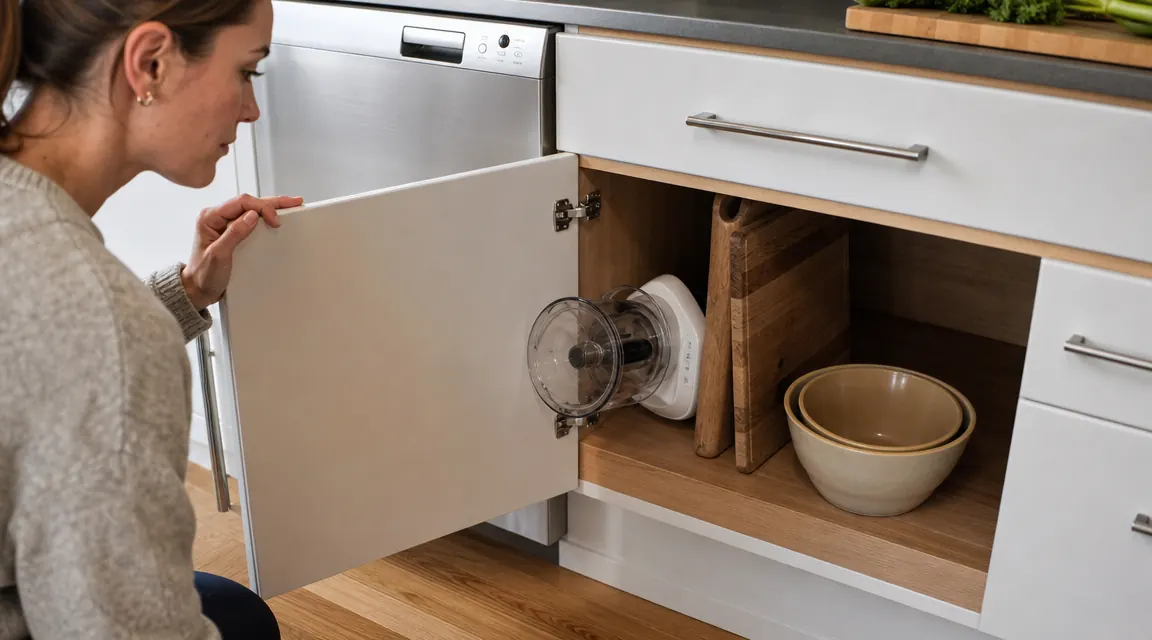
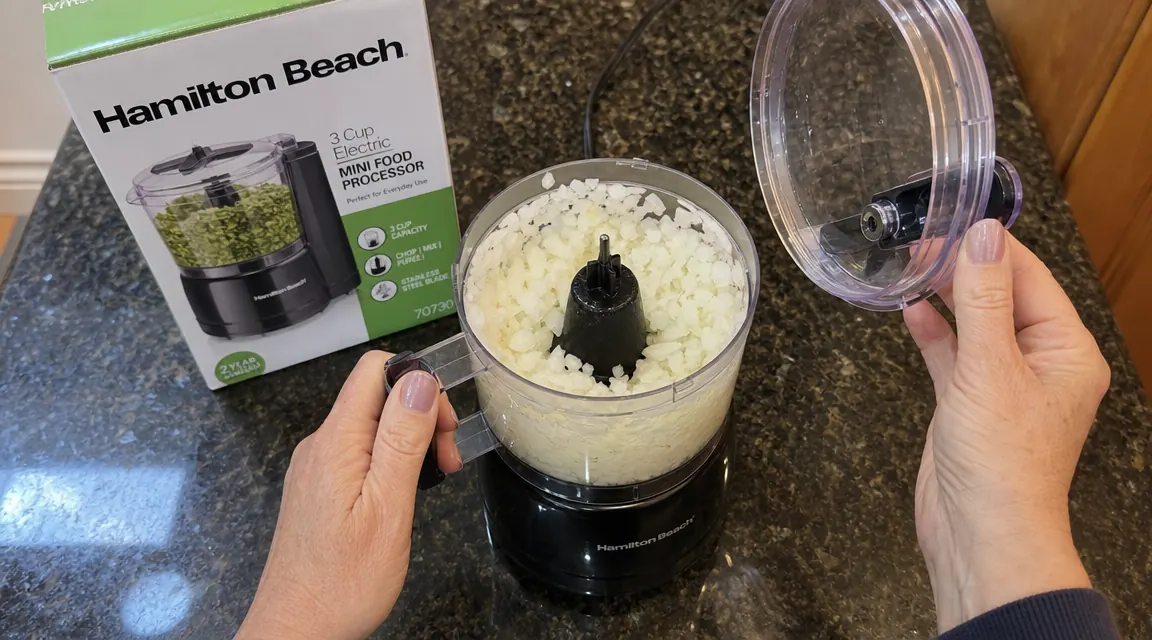
My setup: the machine lives in the cabinet above my microwave. I pull it out, press the bowl onto the base (one firm clockwise turn), add my ingredients, drop the lid on, and pulse. The whole process from cabinet to counter to finished chop takes under two minutes including washing the bowl. That is the core value proposition right there, and for my actual daily needs, the machine delivers on it consistently.
What I do not use it for: anything I want uniformly sliced, anything involving more than about two cups of actual volume, or anything that needs to stay chilled during processing. The 3-cup label is the bowl size. The actual fill ceiling where you get even results is closer to 1.5 to 2 cups. More on that shortly.
The Capacity Number is Not What You Think
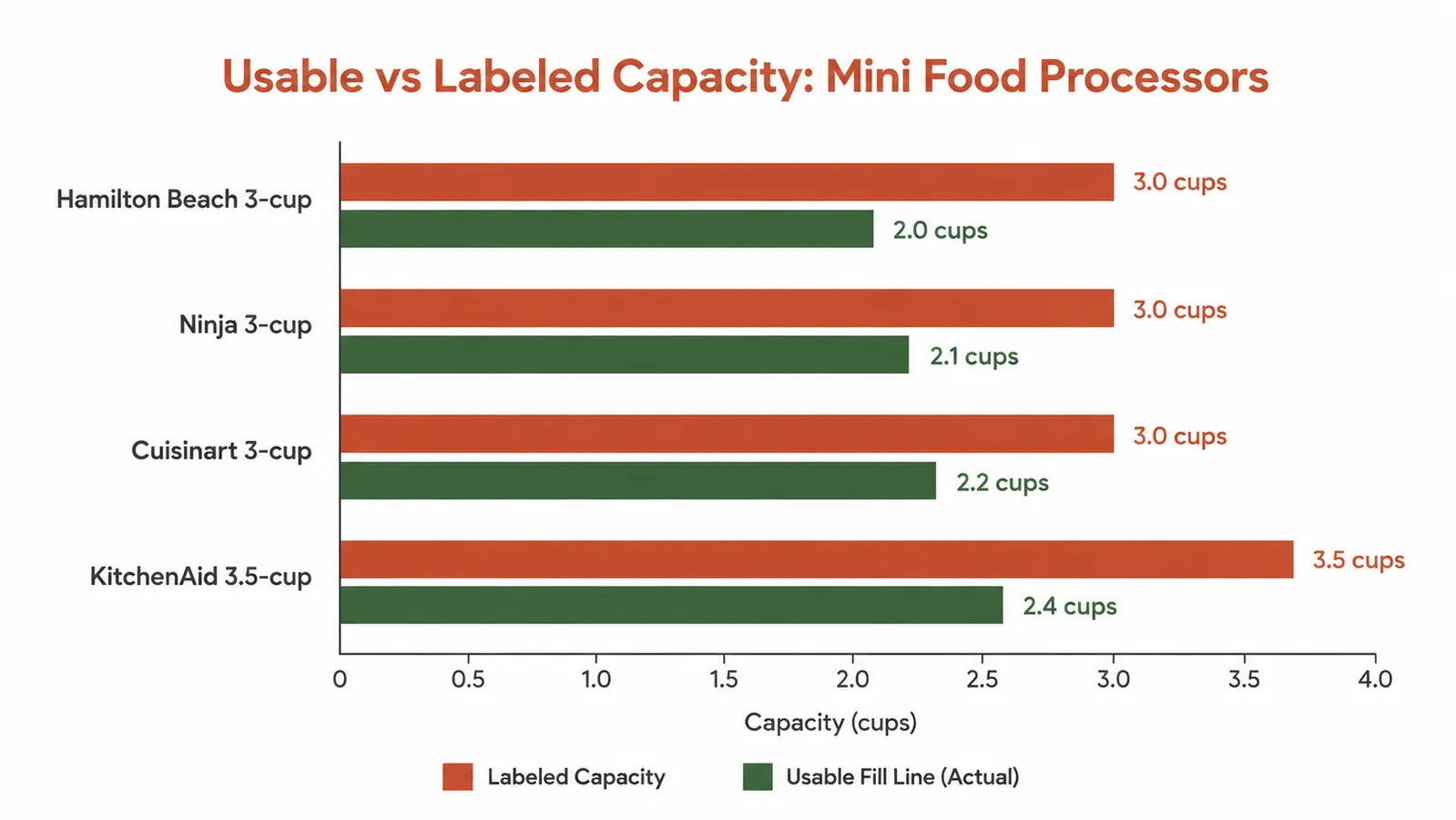
This is the number one hidden tradeoff with the Hamilton Beach 3-Cup and honestly with most mini processors in this size category. The bowl holds three cups. That is accurate. But usable capacity, meaning the amount you can actually put in and get consistent chopping out of, is meaningfully lower. With soft wet ingredients like tomatoes or cooked chickpeas, I fill it to about 60 percent of bowl height and get good results. Above that, the pieces at the top bounce around without engaging the blade and come out uneven.
In practice this means: one full can of chickpeas for hummus requires two batches if you want a smooth result. Half a large onion fits fine; a whole large onion needs to be rough-cut before it goes in, and even then you are pushing it. If you are feeding two people and need a full cup of minced aromatics, you will do two quick passes. None of this is a dealbreaker for a small kitchen where you are mostly cooking for one or two. It would be if you were batch-prepping for four.
The bowl holds three cups. Usable capacity is closer to two. That is not a defect. It is just what the spec sheet does not say, and it matters if you are planning to make a full batch of hummus.
The Bowl and Blade Situation
The bowl is BPA-free plastic and feels solid enough. After 14 months of near-daily use, mine has developed light scratch marks on the interior from the blade, which is normal for any plastic food processor bowl. The scratches do not affect performance and they do not harbor food in any meaningful way as long as you wash promptly. The blade itself is a single stainless S-blade that does not lock into the bowl the way full-size processor blades do. It sits on a center post and lifts right out during washing, which is both convenient and mildly dangerous. The blade is sharp. Lift the bowl by the handle, not by reaching in.
One note on the bowl gasket: the rubber seal ring that sits inside the lid can pull out if you are aggressive when washing or if you run it through the dishwasher repeatedly. Mine came loose after about six months. I press it back in by hand, and it has stayed put since. This is the kind of minor maintenance you might never encounter, or might encounter every few months. Worth knowing about before you buy rather than after.
The dishwasher question: the bowl and lid are labeled top-rack dishwasher safe. I wash mine by hand because the bowl is small enough that it takes about 20 seconds under the faucet and because repeated dishwasher cycles are harder on plastic over time. Your call. The machine itself is wipe-clean only, never submerge.
Motor Power at This Price Point
350 watts is the spec. In the small-appliance world that is modest but functional for what a 3-cup chopper is actually designed to do. I have never stalled the motor on garlic, onion, herbs, or soft vegetables. Where you run into limits is with harder raw ingredients and anything that needs sustained processing rather than quick pulse work.
Nuts are a good test case. Soft nuts like cashews or pecans chop fine, though you need to watch carefully between pulses or you overshoot to paste quickly. Harder nuts like almonds take longer and you can feel the motor working. It handles them, but I would not try to make almond flour in this machine. Same with raw carrots: small pieces, a few seconds of pulsing at a time, and it works. A large rough carrot dropped in whole will bounce around and potentially stall. The machine is not trying to be a full food processor. When you use it within that scope, the motor is more than adequate.
The noise level is worth mentioning here too. This machine is loud. Not scream-into-a-pillow loud, but noticeably loud for a small apartment at seven in the morning. It runs for three to six seconds per pulse which keeps total noise time very short, but if you have thin walls or a partner who sleeps late, early-morning chopping sessions will be noticed.
What It Does Better Than I Expected
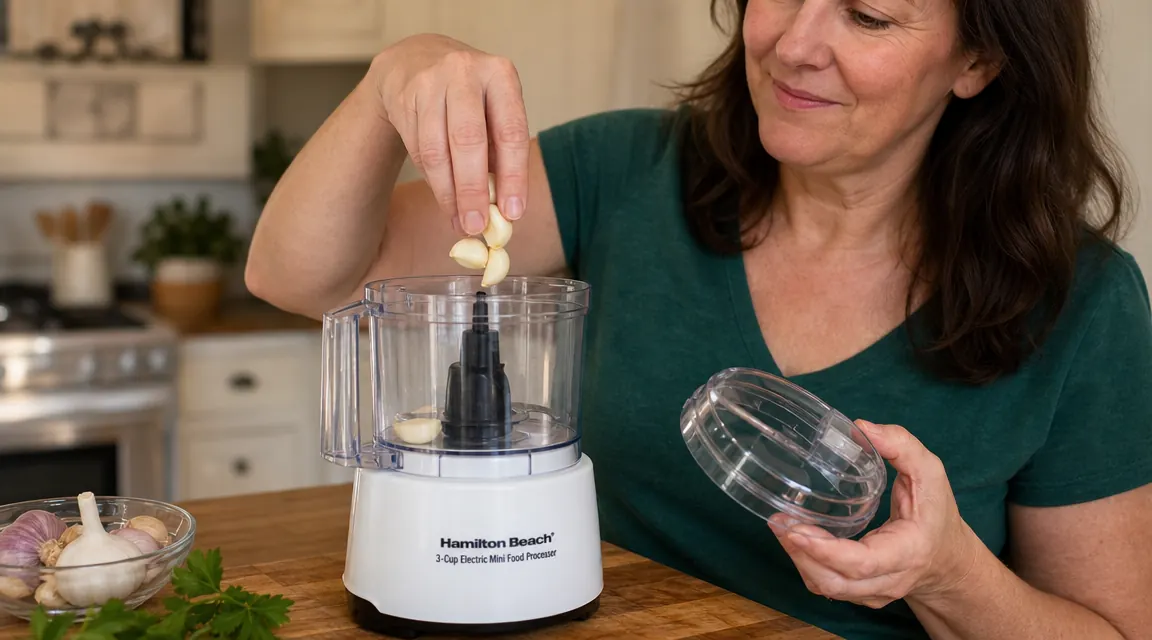
Garlic. This is the single best argument for owning this machine in a small kitchen. I used to mince garlic by hand every night and I thought I was fine with that until I spent one week not doing it by hand. Four cloves, three pulses, done. Clean bowl in 15 seconds. I will never go back to mincing garlic manually on a weeknight.
Fresh salsa is the second strongest case. Tomatoes, onion, cilantro, jalapeno. Rough chop everything, run in two passes, done in two minutes. The Hamilton Beach gives you a textured restaurant-style salsa rather than a blended puree as long as you use short pulses and do not over-process. I make this every week during tomato season.
The third thing that surprised me: breadcrumbs. Day-old bread, torn into rough chunks, dropped into the bowl in batches. Pulse until fine. Homemade panko in about 90 seconds. This is genuinely faster and better than any other method I have tried, and the result is noticeably better than boxed breadcrumbs for finishing chicken cutlets or topping a gratin.
Where It Falls Short
Wet slurries. Anything that needs to stay truly smooth rather than chopped. If you are making a smooth nut butter, a tahini-forward hummus, or a silky soup base, this machine will take you 80 percent of the way and leave you with a slightly grainy finish. A countertop blender or immersion blender handles the last 20 percent better. For a small kitchen where you are choosing one device, this matters.
Slicing and shredding. The Hamilton Beach 3-Cup has a single S-blade. There is no slicing disc, no shredding attachment, no julienne option. If you regularly prep shredded cabbage for slaw or want to slice potatoes thin, this machine does not do that. A full-size food processor with attachment discs handles those tasks. This one does not.
Very fibrous ingredients. Celery, leeks, fresh ginger in large pieces, tough herbs like rosemary. The machine handles these but the result tends to be uneven, with some pieces properly chopped and others just bounced around. I cut ginger into small coins before processing and that solves most of the issue. Rosemary I still chop by hand because the fibrous stems never fully break down in the machine.
What I Liked
- Garlic, shallots, and aromatics in under 10 seconds with zero mess
- Footprint is roughly the size of a coffee mug, stores almost anywhere
- At its price point it is genuinely hard to damage your kitchen budget
- Single stacked bowl-and-base design means no extra parts to lose in a small kitchen
- Pulse-only operation gives you precise control over texture
- Makes breadcrumbs and fresh herb blends better and faster than any other compact option
Where It Falls Short
- Labeled 3-cup capacity but usable fill is closer to 1.5 to 2 cups for even results
- Lid has a noticeable plastic smell for the first few uses
- No slicing or shredding attachments, so it cannot replace even a basic food processor for all tasks
- Loud for apartment thin-wall situations, especially at volume
- Bowl gasket seal can come loose with aggressive dishwasher use
- Struggles to achieve fully smooth results for nut butters and silky purees
How It Compares to the Ninja Food Chopper
The Ninja 3-Cup Food Chopper is the main alternative at this size and price range, and it is worth being direct: both machines do the core job. The Ninja has a slightly larger opening which makes it easier to drop in whole small onions without pre-cutting. The Hamilton Beach has a simpler bowl-lock mechanism that I find more intuitive. Blade design and motor wattage are similar. My honest take is that if you already own one or the other, there is no reason to switch. If you are buying new, the Hamilton Beach tends to run a few dollars cheaper and the design has been stable for years, which usually means the engineering is worked out.
For a deeper side-by-side breakdown including bowl depth, warranty terms, and how each handles wet versus dry ingredients, I put together a full comparison. See the Hamilton Beach vs Ninja Food Chopper head-to-head if you want that detail before you decide.
Who This Is For
You cook for one or two people most nights. You chop garlic, onion, or shallots more than three times a week. You have a galley or small kitchen where every cabinet inch is accounted for, and you want a machine that stores in a single drawer or on a mid-shelf without reorganizing your whole kitchen. You are not expecting this to replace a full food processor. You just want to stop mince-chopping aromatics by hand on a Tuesday night after work. That person gets enormous value from this machine.
Also a strong fit: anyone who makes fresh salsas, chimichurris, or herb-forward sauces regularly. Anyone who wants to make homemade breadcrumbs or blend small batches of spice mixes. Anyone who prioritizes quick cleanup over maximum capacity.
Who Should Skip It
You batch-cook for four or more people on Sundays. The usable capacity will have you running three to four passes on most recipes and the time savings evaporate. You also want smooth purees, silky nut butters, or sliced vegetables. This machine does not do those things reliably. If your primary chopping task is prep for larger volume cooking, look at the 7-cup or 8-cup full-size processors. They take more cabinet space but that trade is worth it at higher volumes.
Also not the right fit if you need quiet operation. This is not a whisper-quiet machine. If you are in a studio apartment with thin walls and a partner who works nights, the noise matters. For more on which appliances actually save you the most space relative to what they deliver, the 10 reasons a mini food processor earns its footprint piece breaks down the tradeoff math by use case.
If garlic and onion prep is slowing down your weeknight cooking, this solves it for about the same as two takeout coffees.
The Hamilton Beach 3-Cup has held a 4.6-star rating across 36,000+ verified purchases. At its current price it is the lowest-risk small-appliance purchase I have made in this kitchen. Check availability and current pricing before it moves.
Amazon Check Today's Price on Amazon →